
 By Dennis Weche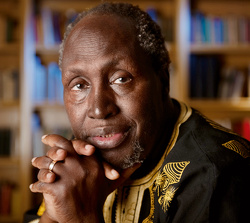
The recent passing of Prof Ngũgĩ wa Thiong’o on May 28, 2025, offers Kenya a moment to pause and reflect not just in sorrow but on how we recognize those who shape our identity. Ngũgĩ was not just a writer; he was a revolutionary thinker who challenged the very foundation of what it means to tell African stories. His choice to write in Gikuyu and Kiswahili wasn’t just about language preference; it was a bold political act of reclaiming voice and culture from the shadow of colonialism.
Ngũgĩ’s literary journey began in English with Weep Not, Child (1964), the first novel published in English by an East African. But it was his decision to embrace his mother tongue and Kiswahili in works like Devil on the Cross (1980) written while he was imprisoned that truly marked his defiance against colonial legacies. His seminal essay Decolonising the Mind (1986) still resonates today, reminding us that language is more than words; it is the vessel of culture, memory, and identity.
Alongside Ngũgĩ, we remember Prof Ken Walibora whose Kiswahili novel Siku Njema (1996) brought urban Kenyan realities to life with nuance and depth. Walibora’s contributions helped elevate Kiswahili literature, championing the language as a powerful tool for storytelling and cultural preservation.
Yet despite their profound influence neither Ngũgĩ nor Walibora has been fully honored in the way their work deserves in Kenya. Across the country athletes receive grand celebrations; stadiums bear their names, national holidays mark their achievements, and their faces fill media screens. Meanwhile writers who have shaped our understanding of ourselves and our history remain largely unrecognized by the state and society.
This cultural gap raises difficult questions. What does it say about us when those who inspire through words and ideas are sidelined in favor of physical feats? Are we overlooking the quiet, enduring power of literature—the way it shapes values, nurtures critical thought, and preserves cultural memory?
Other African countries have found ways to enshrine their literary heroes. Nigeria honors Chinua Achebe as a founding father of modern African literature. Senegal celebrates Léopold Senghor not only as a poet but as a founding political figure. These countries understand that writers are architects of national identity just as much as athletes are champions of national pride.
Ngũgĩ and Walibora’s work urges us to value our languages and stories not only for art’s sake but as acts of cultural survival and liberation. Ngũgĩ’s words are clear:
“Language carries culture, and culture carries, particularly through orature and literature, the entire body of values by which we come to perceive ourselves and our place in the world.”
If Kenya is to honor its past and build a thoughtful future, we must recognize the importance of balancing admiration for physical achievement with respect for intellectual and artistic contributions. The stories told by our authors carry the soul of the nation just as much as the victories won on the sports field.
It is time Kenya widened its circle of honor, ensuring that the legacies of Prof Ngũgĩ wa Thiong’o, Prof Ken Walibora, and many other literary giants live on not only in books but in the hearts and institutions of our country.
Facebook Comments