
 By Dennis Weche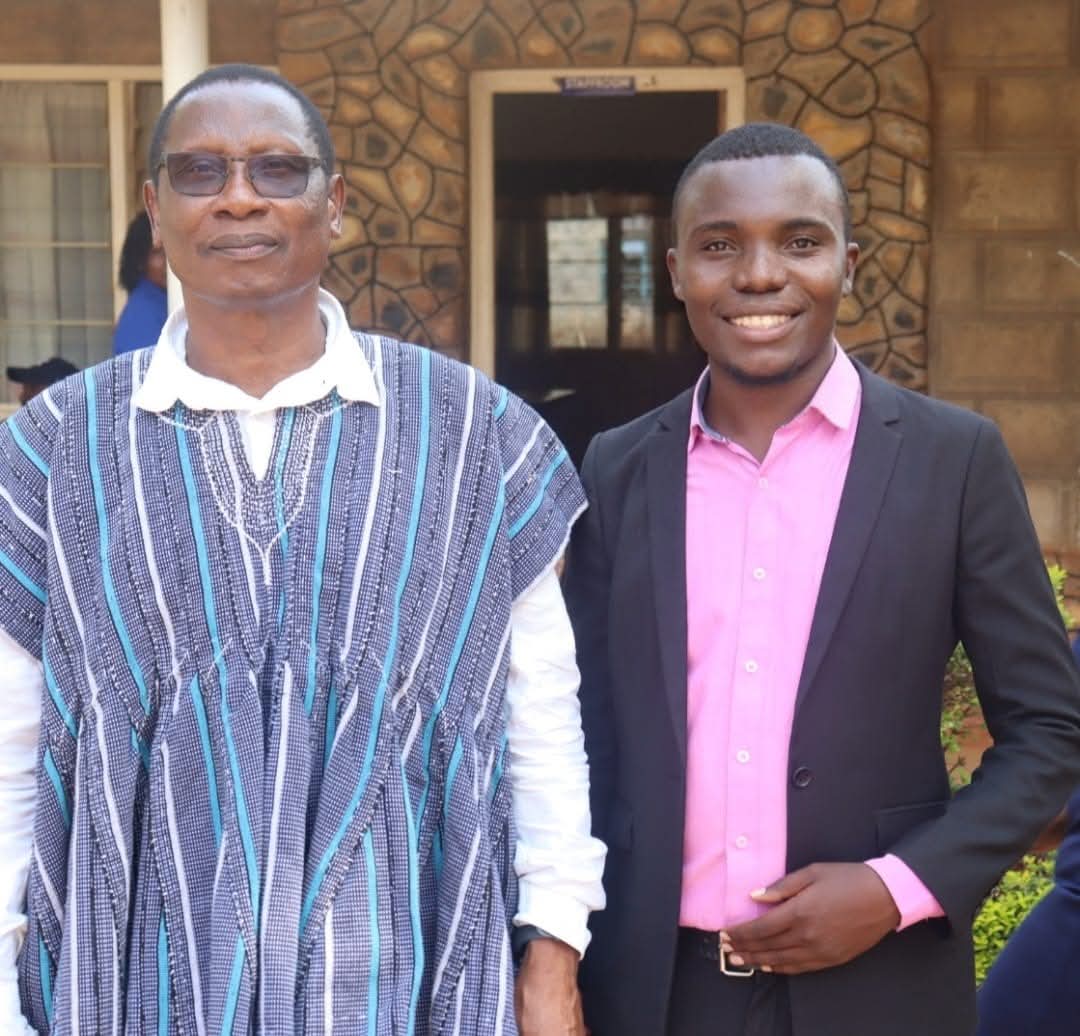
I first met Prof. Egara Kabaji on the afternoon of 18th June 2024, in Ikolomani during a Book Harvesting Day at Musoli Girls School. It was the kind of day when books felt like blessings and stories floated in the air like ancestral spirits summoned to bear witness. His name had long echoed through literary corridors, often spoken with a certain hush, the kind reserved for sacred things. But it was only when he rose to speak that I truly understood the quiet force of the man.
He did not command silence. He invited it. His voice did not thunder. It flowed. Patient, textured, and deeply rooted. He reminded us that books are not ornaments but vessels of memory, carriers of culture, guardians of resistance. When he finished, no one clapped immediately. There was that rare silence, the kind that follows truth. Most of the attendees were high school girls from Musoli, but many of us, teachers, visitors, and locals, felt like we had become children again, sitting in class, listening to a master. The gathering had taken the shape of a classroom. All eyes were on him, dressed that day in a flowing West African smock, a garment rich with cultural meaning.
This afternoon, a fellow writer and distinguished publisher, Barack Wandera, shared the news: Prof. Kabaji has been appointed Chancellor of Mount Kigali University in Rwanda. I was not surprised. I was stirred. Because this is more than a professional appointment. It is a symbolic return. A homecoming. A journey that stretches from the rain drenched ridges of Maragoli to the green altars of Kigali. A literary son summoned to the mountain. As we would say in Kenya today, Profesa Egara amegusa Mrima. And indeed, he has touched the summit, an academic peak in the heart of Rwanda.
Prof. Kabaji is not your everyday academic. He is a professor of literary communication at Masinde Muliro University of Science and Technology, but his influence stretches far beyond lecture halls. His footprints are in libraries and classrooms, in rural schoolyards and literary festivals, in the dreams of young minds from Nairobi to Arusha. He has written over forty books, more than thirty of them for children, yet his legacy lies not in the number of titles but in the depth they carry.
In his seminal novel A Journey to Becoming, recognised in the 2022 Jomo Kenyatta Prize for Literature, he explores resilience and womanhood with uncommon tenderness. In Mourning Glory, published to mark his sixtieth birthday, he writes with the ache of a poet and the insight of a sage. And in what might be his most enduring offering, he spent more than a decade compiling and publishing the Llogooli Dictionary, the first of its kind. Not just a dictionary, but a revival of a language, a culture, and a people.
Mount Kigali University could not have chosen better. In Prof. Kabaji, they receive not just a leader but a guardian of the African word. He believes that universities should not merely confer certificates but awaken souls, producing thinkers who know where they come from, writers who refuse to be silenced, and teachers who hold up the mirror to society.
He has lived this philosophy with quiet consistency. From mentoring under mango trees in Ejinja to lecturing in global halls, from shaping discourse through Nation columns to compiling Jomo Kenyatta: Father of Harambee, his life has been in service of the word. He believes, and lives by the conviction, that African stories must be told by African voices, with grace, with grit, and with unflinching dignity.
And so Rwanda, rising from tragedy into triumph, has called upon him. In the ancient way of our ancestors, it is said that the mountain chooses the seer. And this time, the mountain has chosen one of our own.
To Prof. Kabaji, son of Vihiga, keeper of memory, builder of bridges, we say walk gently, for the mountain is listening. Speak softly, as you always have, for the wise are still leaning in. And when you write again, and we know you will, may your words not only move minds but stir something deeper. Something ancestral. Something enduring.
The mountain awaits
The storyteller has arrived
Twishimiye umujyanama wanjye
Hongera Mwalimu wangu
Congratulations Mwanitu
Good write-up. You write good stuff.
On prof. Egara Kabaji, I once attended a literature workshop at Mmust he hosted and attended by literally greats like Tony Muchama, the late Prof. Shiundu, the late Prof. Wanjala.. etc etc.
This is excellent 👌