
 By Dennis Weche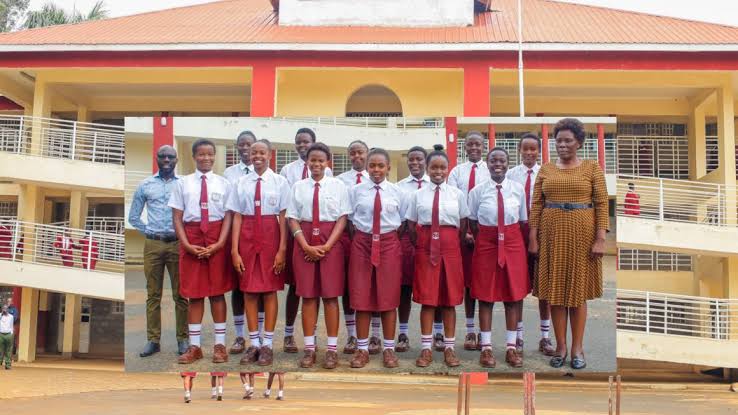
Butere Girls High School, nestled in the southern part of Kakamega County, is not just a school. It is a home of stories, of transformation, of dreams quietly forged and loudly realized. To the unknowing passerby, it may appear like just another institution behind a well painted gate and manicured lawns. But to those who have walked its red soil paths, worn its white and maroon uniform, and sat in its age old classrooms, it is sacred ground.
They call it Yabakhana, a simple, earthy word from the Luhya tongue that means “the girls,” but in their hearts, it carries so much more. It is a way of setting it apart from its male counterpart, Butere Boys High School, located just across the road. A reminder of the days when both schools basked in equal glory.
While the boys school has weathered seasons of struggle, Yabakhana has grown ever more radiant, like a lone flame that refuses to bow to the wind.
Back in the day, a girl from Butere Girls in my village was treated with a kind of reverence, almost like royalty among her peers. I went to a humble day school, Shikomari Mixed Secondary School, where access to learning materials was scarce. Getting notes or books from a Butere Girls student was a privilege, a stroke of academic luck. And if you ever made the mistake of walking into our school with such materials, you would instantly attract attention and a bit of envy. Fellow students believed those notes held the magic to unlock better grades. And honestly, they often did. Yabakhana had the best resources, and we all knew it.
Its foundations were laid in 1916, not just with bricks but with vision. The kind only pioneers carry. Jane Elizabeth Chadwick, an Irish missionary, planted the first seeds of this now mighty tree, believing that the education of an African girl was not a luxury but a necessity. That small seed grew steadily, quietly resisting the odds of its time, and by 1957, it stood tall as a full fledged secondary school. In every decade since, Butere Girls has poured forth women of power, wisdom, and grace. Leaders in classrooms, courtrooms, boardrooms, and beyond.
To speak of Butere Girls today is to speak of a fire that does not go out. Its academic flame has burned brightly year after year. In 2023, while many schools across the nation struggled with the weight of educational reforms and shifting syllabi, Yabakhana soared. With 81 students earning straight As and a staggering 99 percent pass rate in the KCSE, the school did not just survive, it dazzled. Only four out of 558 students failed to secure direct university entry. In a land where opportunities are often scarce and uneven, such an achievement is no small miracle.
But the pride of Yabakhana is not limited to numbers and grades. It lives in the voice of the girl who stands up to speak her truth on a wooden stage. It echoes in the footsteps of the girl who dares to question what is wrong with society and imagine what could be right. This week, the school’s drama club captured national attention with Echoes of War, a play so powerful it stirred the air in government offices and living rooms alike. Tackling themes of corruption, inequality, and forgotten histories, the students did not act. They called. Their performance, like a drumbeat, reminded the nation that Butere Girls raises thinkers, not mimics. Prophets, not parrots.
The school’s theatre roots run deep. Who can forget the roar that followed Shackles of Doom, the earlier production that laid bare the wounds of systemic oppression and was promptly banned for daring too much? And yet, the girls never stopped dancing with fire. They learned to wear courage like a badge, to lace their performance with the same audacity that defines true freedom.
The alumni carry this light wherever they go. Mama Rachel Ruto, the country’s First Lady and a proud daughter of Yabakhana, returns often to speak not as a dignitary, but as a sister, a mentor, a mother. Wakili Rosa Waseka, a girl from Eshiaka Mumboto whose name rings in legal circles far and wide, also calls this school her fountain. But beyond the big names are thousands more. Teachers, scientists, nurses, farmers, entrepreneurs. All daughters of Chadwick’s dream.
And so, when the alumni of Butere Girls gather, whether under a mango tree in Kakamega or in a conference hall in Nairobi, they call themselves Yabakhana with full hearts. Not because the name is fancy, but because it is true. It reminds them of early mornings and burning lanterns, of sisterly laughter and disciplined silence, of dreams whispered in dormitories and shouted from graduation podiums.
The school’s motto, Pour Seulement Le Meilleur — Only the Best — is not an empty chant. It is a lived creed. In the corridors of Butere Girls, the best is not just about marks on paper. It is about heart. It is about fire. It is about remembering where you come from and refusing to forget who you are.
For the daughters of this school, Yabakhana is more than a nickname. It is a soul call. A song. A legacy.
And every time a new girl crosses through the school’s gate, a new verse is added to that song.
Bro Dennis Weche, indeed you have hammered the nail on the head. The facts, the humour, the flow of language is splendid and worthwhile. How l wish the story would be read by many more. It has made my day.
Thank you madam. 😊
I totally appreciate you
A wonderful piece i could see myself in every line written. So proud to be one of the hearts from Yabakhana Butere Girls. Good piece